
Maltese Society in the Age of Upheaval (1798-1813)
It is a peculiar quirk of history that the Maltese Islands, so often described as a “fortress” or a “prize,” are rarely examined from the inside. Between the departure of the Knights of St. John in 1798 and the formal establishment as a British Crown Colony in 1813, the common people—the Popolin—lived through a whirlwind of revolution, blockade, famine, and political experimentation. They were not merely passive passengers on this turbulent voyage; they were active participants who overthrew a monarchy, experimented with republicanism, and ultimately negotiated their survival amidst the clash of empires.
To walk through the villages and slums of Malta during the “Blockade Years” (1798-1800) and the subsequent British Protectorate is to discover a society that was resilient, deeply conservative in its religious identity, yet startlingly modern in its sudden burst of political self-awareness.
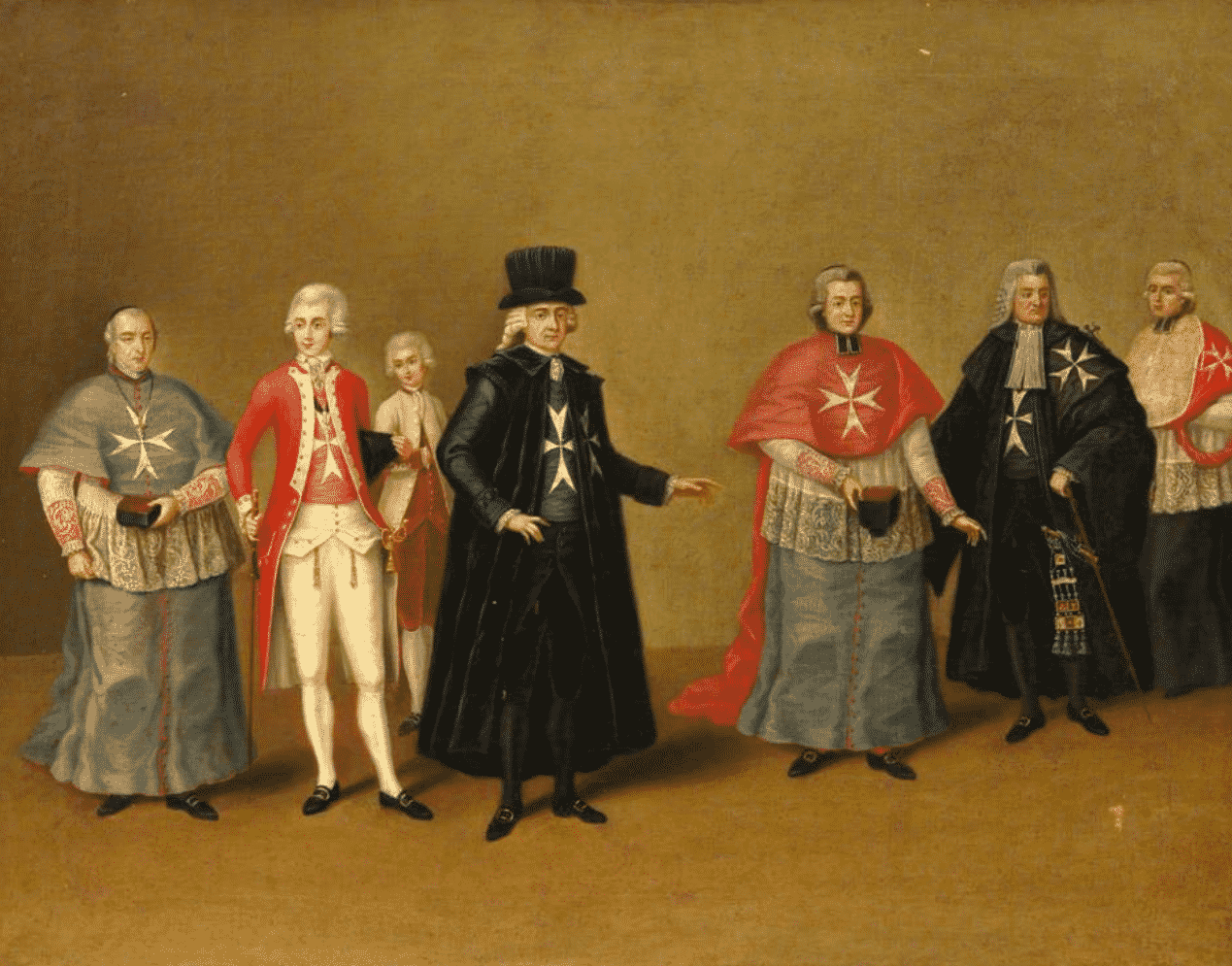
Life Under the Last Knights: A Society Built on Division.
To understand the rage of 1798, we must first understand the quiet desperation of 1790. For the 100,000 or so inhabitants of the islands, life under the Order of St. John was defined by a rigid, unyielding hierarchy. The Knights were foreign noblemen; the Maltese were, as historian Carmel Cassar notes, subjects expected to exist in a state of “almost complete destitution”.
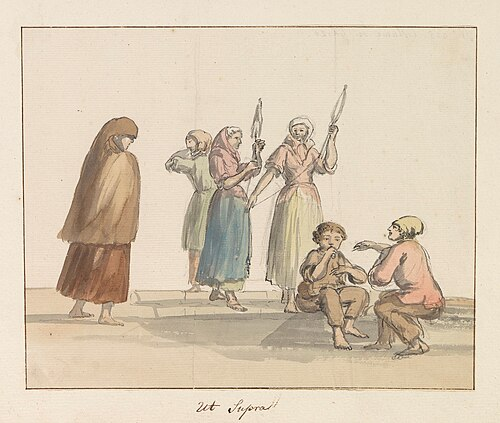
For the majority—the farmers in the Naxxar and Qrendi, the cotton spinners in città pintó (Bormla), and the longshoremen in Valletta—home was a precarious place. Urban overcrowding was a crisis of its own: the poor in Valletta often lived in single-room cellars with no light or air save for the street door, while in the countryside, families lived in what visiting clerics described as “caves or African huts”. Despite the grandeur of the Sacra Infermeria, hygiene was primitive; water was a luxury strictly regulated by the authorities, and diseases swept through the population with terrifying regularity.
Yet, life was not devoid of agency. The villagers had their festa, the collective identity of the città or casale was fierce, and the Church provided a parallel structure of power. A woman’s dowry might consist of a single holy picture; a peasant’s greatest pride was the cotton he grew. This was a world of “bejnietna nirranġaw”—we sort things out among ourselves—a fierce localism that would prove vital against the professional armies of Napoleon.
The Shock of the New: The French Interlude (1798-1800)
When Napoleon Bonaparte arrived in June 1798, the Knights folded almost instantly. Initially, many Maltese, particularly the educated class like Mikiel Anton Vassalli (the father of the Maltese language who had been imprisoned by the Knights), saw the French as liberators. The French brought the Enlightenment: they abolished nobility, freed Muslim slaves, and established a Republic on the island.
But the “liberation” quickly soured. The French Republic was cash-strapped. To pay its troops, it began looting the churches—the very soul of the Maltese identity. Worse, they imposed taxes on everything, including the property of the Church, breaking the implicit contract that had governed the island for centuries.
The rebellion began not in a parliament, but in the streets. On September 2, 1798, at a property auction in Rabat, a scuffle broke out. The French captain, Masson, was killed. Within hours, the church bells were ringing “the insurrection.”
What followed was a grim two-year blockade. The French were forced to retreat behind the fortifications of the harbour area (Valletta and the Three Cities). The Maltese, led by local leaders like Vincenzo Borg (a cotton merchant) and Canon Caruana (a priest), took control of the rest of the country.
For the common people, this was a brutal experiment in self-government. They formed a National Assembly and, for the first time, created “Maltese-made laws”. But it was a war of attrition. While the French starved inside Valletta, the Maltese faced their own horrors. The British Navy, under Captain Alexander Ball, provided a naval blockade, but the land siege came at a terrible price.
The Civil War Within
The narrative of a united Maltese uprising is a myth. Research reveals a deep fracture: the colli (the rural, devout, priest-led villagers) versus the city dwellers who had collaborated with the French. Between 1798 and 1800, an estimated 10,000 Maltese died—not just from French bullets, but from starvation and, shockingly, internal violence. Some French sympathizers were captured, taken to Comino, and executed by their countrymen. In at least one extreme incident, the ferocity of the revolt turned to cannibalism. The “people” were not a monolith; they were a fractured community battling for survival and identity.
The British Protectorate: Between Hope and Hunger (1800-1813)
When the French finally surrendered in September 1800, the Maltese expected a reward. They had, after all, defeated a French army largely on their own. They hoped for independence, or at least self-governance under the protection of King George III.
In June 1802, 104 representatives from the villages and towns signed the Dichiarazione dei Diritti (Declaration of Rights). They proclaimed the King as their sovereign but demanded that Malta be self-governing. It was a radical, democratic move for a Mediterranean peasant society.
But the Great Powers had other plans. The Treaty of Amiens (1802) proposed returning the island to the Knights—a notion the Maltese found so repulsive they threatened to murder the returning Grand Master. Britain, realizing the strategic value of the Grand Harbour, decided to stay.
Life during the early Protectorate (1800-1813) was a mix of economic boom and political disappointment. On one hand, the removal of French blockades and the arrival of the British Navy turned Malta into a logistical hub for the war against the Barbary pirates. The “George Washington,” the first US warship to cross the Atlantic, docked in Valletta to resupply. Trade flourished, and the first banks were established.
But for the common worker, poverty remained the norm. The British administration, led by Civil Commissioner Alexander Ball and later the autocratic Sir Thomas Maitland, was paternalistic. They revived the consiglio popolare (people’s councils) but kept strict control. The people were to be protected, not empowered.
When Sir Thomas Maitland arrived in 1813 (just as a plague outbreak ravaged the island, killing thousands), he dismantled the local municipal structures. He ruled with an iron fist, believing the Maltese were “ignorant and wayward children in politics”. The brief taste of freedom—those years of the National Assembly—was over.
The Dawn of a New Era
By 1813, Malta was no longer a “Protectorate” but a “Crown Colony.” The transition from the Knights to the British was complete. For the common people, the journey had been an exhausting marathon. They had seen the arrogance of the Knights, the promises of the French, and the pragmatism of the British.
They had lost their feudal masters but gained the “Magna Charta” of the 1802 Declaration. They had starved during the blockade but had proven they could govern themselves. As Malta prepared for 150 years of British rule, it carried with it a new, hardened identity: no longer just subjects of a foreign order, but a political nation—poor, devout, resilient, and deeply suspicious of anyone who tried to tell them how to live.
Their voices, preserved in the notarial acts and criminal tribunals of the time, remind us that history is not made by Grand Masters or Generals, but by the man selling mackerel at the wharf, the woman spinning cotton in a dingy cellar, and the villagers who rang the bells to signal a revolution.
Agoraios
Key Academic References
Boffa CJ (1998) The saga of the French occupation: Malta, 1798-1800 Progress Press Co. (available) via NYPL and Harvard Library)
Author: Not specified (compiled work) (1997) The French in Malta, 1798-1800) Midsea Books (via Google Books) .
Anonymous French knight (1798-1800). The diary and memoirs of a French knight (2013) (J. Scicluna Trans.) Malta University Press (via Stanford University)
Vella. Y. (2022) Once upon a time in 1798, 1799, 1800: forgotten stories from the French period in Malta. Midsea Books Ltd. (via University of Malta)
Darmanin D.A. (2022) Military burials at Rock Gate Cemetery, Cospicua. Melita Historical Society (via University of Malta)