
The Decadence of the Knights and the Betrayal of 1798
The Day the Shields Shattered
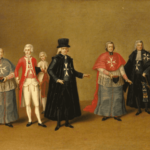
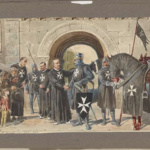
On the morning of June 11, 1798, the historic streets of Valletta did not echo with the proud battle cries of the Sovereign Order of St. John. Instead, they rang with the desperate, chaotic sounds of a massive public chaos. Outside the grand palaces where the aristocratic Knights had spent decades indulging in luxury and detached bureaucratic rule, thousands of Maltese citizens—merchants, laborers, and rural families who had fled behind the massive bastions—realized they had been utterly betrayed.
Grand Master Ferdinand von Hompesch sat paralyzed by indecision within the palace walls, while his deeply fractured Order folded from within. French Knights openly refused to fire upon Napoleon Bonaparte’s approaching fleet, while the native Maltese militias, suddenly realizing their rulers were cowards, dropped their muskets in disgust.
When the white flag was hoisted over the towering ramparts, it didn’t just signal a military surrender to Napoleon; it marked the spectacular, ignominious collapse of an outdated feudal oligarchy. The Maltese people, who had spent nearly three centuries bleeding for the Order’s defense, were suddenly forced to realize a chilling truth: they had been bargained away like real estate, excluded from the negotiations, and left entirely vulnerable to the radical whims of a conquering French Republic.
The Ideological and Financial Collapse
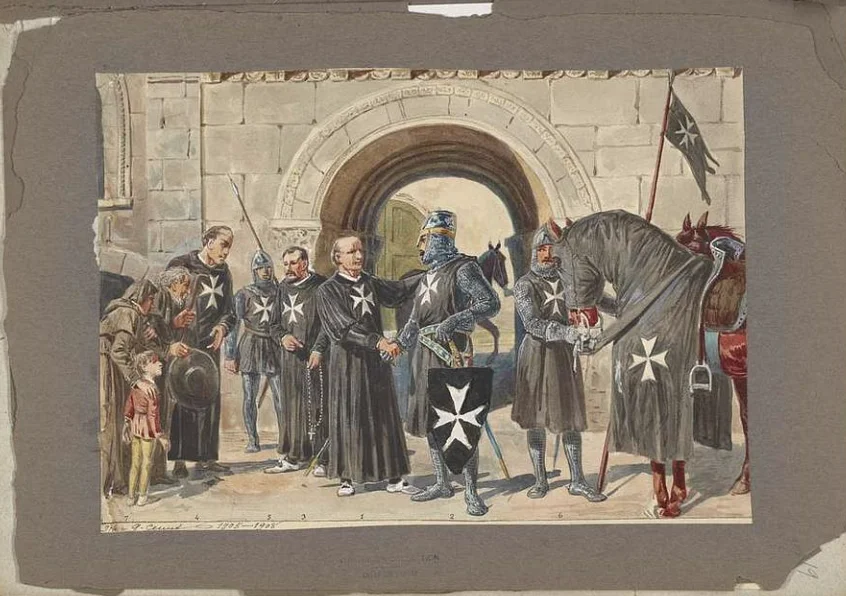
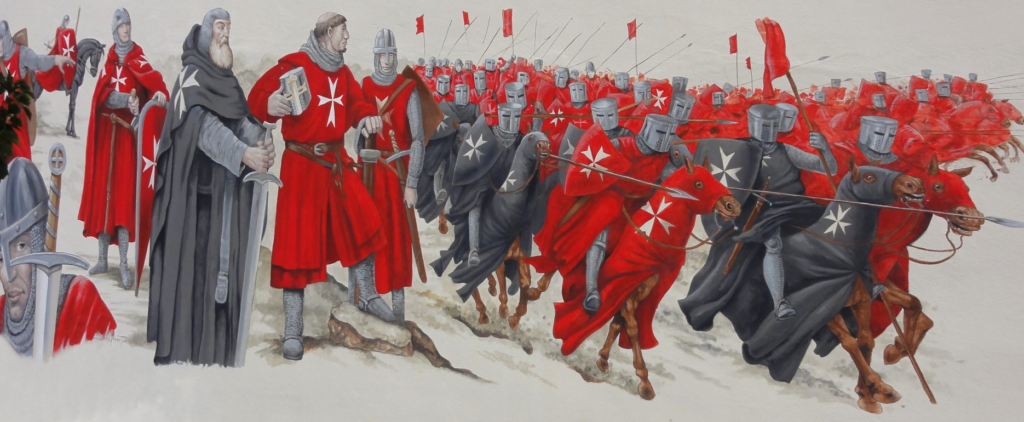
To understand why the seemingly impregnable fortifications of Valletta fell in less than a week, one must look past the military maneuvers of Napoleon and look inward at the profound institutional decay of the Order itself. By the late 18th century, the Knights of St. John had functionally outlived their crusading purpose. The Mediterranean corsairing raids that once defined their maritime prowess had dried up, leaving behind an elite ruling class that acted more like an occupying nobility than a holy military order.
The definitive blow, however, was economic. The French Revolution of 1789 ruthlessly nationalized all Church property in France, which instantly dismantled the Order’s financial life support system by stripping them of their wealthiest estates.
The Structural Reality
Desperate to maintain their lavish lifestyles in the face of sudden bankruptcy, the Knights squeezed the local Maltese population through heavier economic burdens. At the exact same time, the administration descended into a state of reactionary paranoia, heavily censoring any local whispers of progressive Enlightenment ideals.
As historian Roderick Cavaliero points out in his definitive work, The Last of the Crusaders, the internal rot and sheer lack of military readiness made the islands an effortless target for the French Republic. The Order was ideologically hollowed out long before Napoleon’s ships appeared on the horizon.
A Society Fractured: How the Maltese Felt
For the ordinary Maltese citizen, the Knights were no longer the legendary protectors of Christendom; they were a distant, self-serving elite living in opulence while the local population faced mounting hardship. When the crisis of 1798 arrived, the reaction of Maltese society was deeply split along class and cultural lines.
The Intellectual Bourgeoisie
Among the educated Maltese middle class—composed of doctors, lawyers, and priests—there was a quiet but fervent embrace of Enlightenment principles. As Frans Ciappara documents in The Roman Inquisition in Enlightened Malta, an intellectual underground viewed the Order as a corrupt, outdated oligarchy that was actively choking Malta’s economic and social progress. For this progressive class, Napoleon was initially perceived not as a foreign conqueror, but as a liberator who would tear down feudal monopolies and grant the Maltese a rightful voice in their own domestic governance.
The Peasantry and the Clergy
Conversely, the highly religious rural population viewed both the decadent Knights and the radical, secular French with intense suspicion. Yet, their resentment toward their immediate rulers was undeniable. When called upon to defend the islands, the local Maltese militias simply refused to lay down their lives for a regime they no longer respected.
Carmel Testa’s extensive research in The French in Malta, 1798–1800 highlights this internal collapse. Militia units dissolved from within because the Maltese men felt an overwhelming sense of betrayal. They watched the Knights surrender an island fortress capable of withstanding months of siege within a matter of days, cementing the bitter realization that the ruling class cared only for their own self-preservation.
The Opening Act of the Colonial Playbook
The swift capitulation of June 1798 represents the tragic, recurring blueprint of Maltese colonial history. In his eyewitness accounts collected in the Diary of the Siege of Malta, Louis de Bosredon de Ransijat notes how rapidly the civilian population turned on the Order as the chaos unfolded. The ultimate tragedy for the Maltese people was their total exclusion from the mechanics of power.
Within the span of a few days, the sovereignty of their homeland was signed away behind closed doors by Grand Master Hompesch. The Maltese population went from being the subjects of a dying, medieval Catholic order to the subjects of a radical, foreign secular Republic without a single native voice being consulted. It was a cold, transactional handoff on the geopolitical market—a chilling preview of the century of British autocratic rule that was soon to follow.
Agoraios
Sources and References
Cavaliero, R. (1960). The Last of the Crusaders: The Knights of St. John and Malta in the Eighteenth Century. Hollis & Carter.
Ciappara, F. (2001). The Roman Inquisition in Enlightened Malta: The Changing Face of a Court, 1750–1798. Studies in the History of Malta.
Testa, C. (1997). The French in Malta, 1798–1800. Midsea Books.
Bosredon de Ransijat, L. (1801). Journal du Siège de Malte (Diary of the Siege of Malta).